
Ramesh Kumar
Ramesh Kumar· 6 years ago
Simplifying learning through practical guides, educational resources, and easy-to-understand explanations.

अपेक्षा और उपेक्षा में क्या अंतर है?

23
4.7K

Join this conversation

Sort By

अपेक्षा और अपेक्षा में अंतर बहुत ही अंतर होता है दोनों एक दूसरे से अलग होते हैं यह एक दूसरे के विलोम शब्द होते हैं l आईए जानते हैं अपेक्षा और अपेक्षा में क्या अंतर होता है l

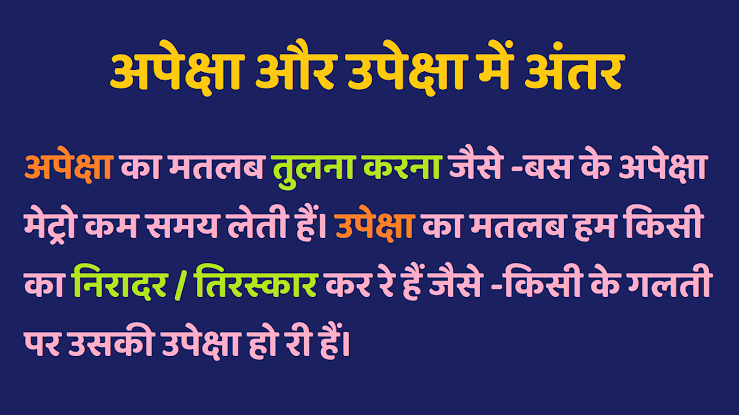
अपेक्षा का मतलब उम्मीद करना होता है l

तथा उपेक्षा का मतलब इग्नोर करना या ध्यान ना देना होता है l अपेक्षा का विलोम उपेक्षा होता है l अपेक्षा में उम्मीद की जाती है और उपेक्षा में तिरस्कार किया जाता है l

अपेक्षा का मतलब तुलना करना - राम हरि की अपेक्षा अधिक बुद्धिमान है l

आशा करना - तुमने मेरे साथ जो व्यवहार किया मुझे इसकी अपेक्षा नहीं थी l

उपेक्षा- उचित सम्मान ना देना, महत्व न देना l

मोहन की बातों पर कोई ध्यान नहीं देता l सब उसकी उपेक्षा करते हैं l इन दोनों वाक्य में बहुत ही अंतर है अपेक्षा और उपेक्षा दोनों ही अलग होते हैं lArticle image
Answered by
K
kajal YadavWellness remedy Advisor
View Profile
Answered on11/17/23
8

अपेक्षा और उपेक्षा दो अलग अलग शब्द है और इनमे उतना ही अंतर् है जितना किसी की प्रशसा करने या अपमान करने में होता है .......!

अपेक्षा का अर्थ होता है किसी से कोई उम्मीद रखना

उदाहरण :- उसेअपने बेटे से बहुत अपेक्षाएं है !

उपेक्षा का अर्थ होता है किसी का अपमान करना

उदाहरण :- हमे किसी की उपेक्षा नहीं करनी चाहिए !

अपेक्षा और उपेक्षा में क्या अंतर है

Answered by
V
Veer PalAuthor
View Profile

I like reading and writing

Answered on04/30/20
11

अपेक्षाअर्थात किसी से उम्मीद करना, जब हम किसी से बहुत मन से जुड़ते है तो वहाँ से हीअपेक्षा शुरू हो जाती है। अपेक्षा कोई भी किसी से भी कर सकता हैं जैसे - माता पिता बच्चों से, पत्नी अपने पति से, शिक्षक अपने विधार्थियो से, प्रेमी अपनी प्रेमिका से, जनता अपने प्रतिनिधित्व करने वाले से । अपेक्षा किसी से भी हो जाती हैं यह स्वभाविक गुण है। लेकिन कहते है ना किसी से ज्यादा अपेक्षा नही करना चाहिए यह कष्टदायी हो सकता है। क्योकि मनुष्य का गुण है अपने मन के अनुसार कार्य ना होने पर वह दुखी होता है क्योकि वह अपेक्षा ज्यादा करता है।

अब बात करते हैउपेक्षाकी जिसका अर्थ होता है- किसी व्यक्ति, वस्तु या स्थान की अनदेखी करना या इंग्नोर करना।यह उपेक्षा का शिकार कोई ना कोई व्यक्ति अपने जीवन काल में अवशय बनता है। अपेक्षा यदि संतुलित हो तो वह कामयाब बनाता है, वहीउपेक्षामनुष्य को अंधकार की तरफ ले जाता हैं। उपेक्षा एक तरह की विकृति है। Article image

Answered by
komal Solanki
View Profile
Answered on11/20/23
3

अपेक्षा और उपेक्षा दोनों शब्द सुनने में मिलते-जुलते हैं, लेकिन इनके अर्थ बिल्कुल अलग होते हैं।

अपेक्षा का मतलब होता है किसी से आशा या उम्मीद रखना। जब हम किसी व्यक्ति या स्थिति से कुछ अच्छा होने की उम्मीद करते हैं, तो उसे अपेक्षा कहते हैं।

उपेक्षा का अर्थ होता है अनदेखा करना या ध्यान न देना। जब किसी व्यक्ति या चीज़ को जानबूझकर महत्व नहीं दिया जाता, तो उसे उपेक्षा कहा जाता है।

अपेक्षा में उम्मीद और सकारात्मक भावना होती है, जबकि उपेक्षा में नजरअंदाज करना और दूरी बनाना शामिल होता है।

उदाहरण:

मुझे तुमसे मदद की अपेक्षा है

उसने मेरी बातों की उपेक्षा कर दी

इन दोनों शब्दों का अंतर समझने से भाषा का सही उपयोग करना आसान हो जाता है।

Answered by
Tara Verma
Tara VermaTen years in the classroom, shaping minds — bringing the same clarity and purpose to every piece she writes about education.
View Profile

Tara Verma is a practising teacher and education content writer with over 10 years of classroom experience across primary and secondary levels. She holds a Master's degree in Education (M.Ed.) from Delhi University and a Bachelor of Education (B.Ed.) from Jamia Millia Islamia — qualifications that ground her writing in both pedagogical theory and the day-to-day realities of teaching in India. Her content covers exam preparation strategies, learning methodologies, curriculum guidance, student mental health, career counselling for students, and the evolving state of school and higher education in India. Her work has appeared on platforms including TeacherVision India, Jagran Josh, and Careers360, where she writes for students, parents, and fellow educators who need content built on actual teaching experience — not theory alone. Over a decade of working directly with students across age groups and learning levels has given Tara a practical understanding of how education content should be written — clearly, accessibly, and with genuine awareness of the challenges students and teachers face on the ground. She has taught 1,000+ students, contributed to school curriculum development initiatives, and published 250+ articles on education across digital platforms. She is an active member of the National Council of Teachers of English (NCTE) India. Across all her writing, every recommendation is classroom-tested, every insight comes from direct teaching experience, and every article is held to the same standard she applies in her own classroom — accuracy, clarity, and genuine usefulness for the reader.

Answered on03/20/26
0